
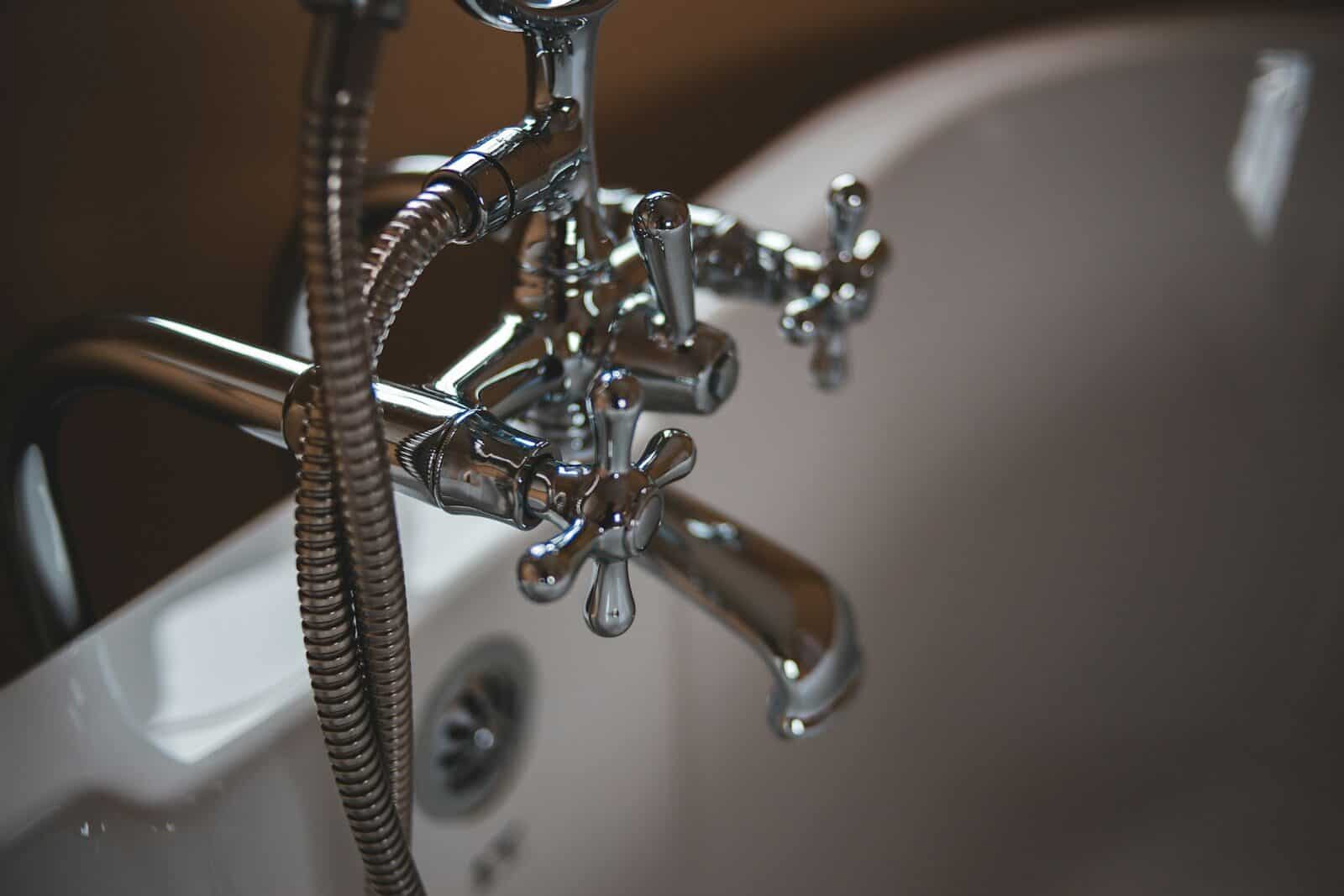
A small drip from the bathtub may not seem urgent at first.
Maybe you hear it at night. Maybe you notice water dripping from the spout after the shower is off. Maybe the hot water side keeps leaking, or the drip persists no matter how tightly you turn the handle.
But when your bathtub faucet is leaking, it is worth paying attention.
A leaky bathtub faucet can waste water, raise utility bills, and create mineral buildup, and it can sometimes indicate worn or damaged parts inside the faucet, wall, pipe, or valve body. What looks like a simple drip may be an easy fix, but it can also be a sign that your bathtub faucet needs professional repair.
At G.A. Eberly Plumbing & Heating, we have helped homeowners, families, landlords, property managers, and businesses across Maryland, Virginia, and Washington, D.C. since 1909. For more than 115 years, our family-owned, woman-operated company has built its reputation on honest service, dependable repairs, and expert craftsmanship.
If your bathtub faucet is leaking, here is what may be causing it, what to check, and when to call a plumber.
Why a Bathtub Faucet Leaking Should Not Be Ignored
A bathtub faucet leaking may seem like a small plumbing issue, but small leaks can add up quickly.
Even a slow drip can waste gallons of water over time. If the leak involves hot water, it may also force your water heater to work harder, which can cost more money. A constant drip can also leave stains in the tub, create calcium buildup around the spout, and wear down the fixture faster.
In some cases, the leak is only coming from the bathtub faucet itself.
In other cases, water may be escaping behind the wall, around the valve body, near the shower diverter, or from a pipe connection you cannot easily see. Hidden leaks are especially concerning because they can lead to water damage before you realize there is a bigger problem.
That is why it is smart to deal with a leaky faucet sooner rather than later.
Don’t wait, fix it now.
Common Causes of a Leaking Bathtub Faucet
A leaking bathtub faucet can happen for several reasons.
Some are simple. Others require the right tools, replacement parts, and plumbing experience.
The most frequent culprits include:
- Worn washer
- Faulty cartridge
- Damaged valve seat
- Loose retaining nut
- Worn O rings
- Mineral buildup
- Calcium buildup
- Corrosion inside the fixture
- High water pressure
- Loose handle or stem
- Damaged diverter
- Aging faucet parts
- Improper installation
- Worn seals
- Problems with hot and cold water control
The exact repair depends on the faucet type. Compression faucets, cartridge faucets, and ball faucets all work differently, which means the parts and repair steps may be different, too.
Before you try to fix a leaking bathtub faucet, it helps to understand what kind of faucet you have and where the leak is coming from.
Understanding Your Bathtub Faucet Type
Different faucet types have different repair needs.
Compression faucets
Compression faucets usually have separate hot and cold handles. They rely on washers and stems to control water. A worn washer is one of the most common reasons a compression faucet starts to drip.
Cartridge faucets
Cartridge faucets use a cartridge inside the handle assembly to control water flow. If the cartridge is worn, cracked, stuck, or damaged, you may need a replacement cartridge.
Ball faucets
Ball faucets are more common in sinks than tubs, but some fixtures use ball-style mechanisms. These can leak when seals, springs, or internal components wear down.
Knowing the faucet type matters because guessing can lead to buying the wrong replacement parts at the hardware store.
If you are not sure which faucet you have, a licensed plumber can identify the fixture, explain the issue, and recommend the right repair.
A Leaky Bathtub Faucet May Start With a Worn Washer
A leaky bathtub faucet is often caused by a worn washer, especially with compression faucets.
Washers press against the valve seat to stop water flow. Over time, that washer can harden, crack, flatten, or wear down. When that happens, water can slip through even when the handle is turned off.
You may notice:
- A steady drip from the spout
- A leak that gets worse over time
- The need to tighten the handle harder
- Dripping from either the hot or cold side
- Water that continues after the tub is shut off
Replacing a worn washer may sound like a quick fix, but the repair still needs to be done carefully. The water supply should be shut off, remaining water should be drained, and the faucet parts should be removed without damaging the stem, valve body, or surrounding fixture.
If the washer is replaced but the drip persists, the valve seat may also be worn or corroded.
Faulty Cartridge Problems in Cartridge Faucets
If your bathtub uses a cartridge-style faucet, the problem may be a faulty cartridge.
A cartridge controls water flow and temperature. When it wears out, sticks, cracks, or fails, water may continue leaking from the spout even after the handle is shut off.
A faulty cartridge may cause:
- Dripping from the bathtub spout
- Trouble controlling hot water or cold water
- Uneven water flow
- Difficulty turning the handle
- Water is leaking around the handle
- A tub faucet that will not shut off completely
In some cases, a new cartridge can solve the issue. But it is important to use the right replacement cartridge for the specific model of your faucet.
The old cartridge may need to be removed by taking off the decorative cap, loosening the retaining nut, and carefully pulling the cartridge straight out. If it is stuck from mineral buildup or corrosion, forcing it can damage the fixture.
This is where professional help can save time, money, and frustration.
Photo by Meg von Haartman on Unsplash
Shut Off the Water Supply Before Any Repair
Before working on any faucet, the water supply needs to be shut off.
Some bathrooms have local shut-off valves for the tub or nearby fixtures. In other cases, the main water supply may need to be turned off. Once the water is off, the remaining water should be drained from the line before parts are removed.
This step matters because skipping it can turn a small repair into a messy leak.
If you are unsure where the shut-off valves are, or if they are stuck, old, leaking, or difficult to turn, it is best to call a plumber. Older shut-off valves can break if forced, especially in homes with aging plumbing.
At G.A. Eberly, we help homeowners handle plumbing repairs safely and correctly, without unnecessary guesswork.
How to Fix a Leaking Bathtub Faucet Safely
Many homeowners search for how to fix a leaking bathtub faucet because they want to know whether it is something they can handle themselves.
Sometimes, the repair may be straightforward for someone comfortable with basic plumbing. Other times, it is better to call a professional plumber.
A basic repair may involve:
- Shutting off the water supply
- Opening the faucet to release remaining water
- Covering the drain so that small parts do not fall in
- Removing the decorative cap
- Removing the handle
- Loosening the retaining nut
- Inspecting the stem, washer, O-rings, or cartridge
- Replacing damaged parts
- Using plumber’s tape or Teflon tape where appropriate
- Reassembling the faucet
- Turning the water back on slowly
- Checking whether the leak is fixed
The challenge is knowing what needs to be replaced.
A worn washer, faulty cartridge, damaged O-rings, corroded valve seat, or loose component can all cause similar symptoms. Using the wrong part or over-tightening with an adjustable wrench can damage the faucet.
If the leak continues after a basic repair, call a professional.
Water Flow Issues Can Point to a Bigger Problem
A bathtub leak is not always just a drip.
Sometimes the leak comes with changes in water flow.
You may notice weak flow, uneven pressure, sputtering, or changes when switching between the tub spout and shower. If the water flow seems inconsistent, the issue may involve the cartridge, diverter, valve body, mineral buildup, or water pressure.
Mineral buildup and calcium buildup can restrict flow through the faucet. In some cases, clean aerators can help with sink fixtures, but bathtub and shower fixtures may require different repair steps.
Water flow issues can also be related to high water pressure in the home.
If the pressure is too high, it can put strain on faucets, valves, washers, O-rings, pipes, and fixtures. That strain can lead to future leaks if it is not corrected.
Hot Water Leaks Can Cost More Than You Think
A bathtub faucet leaking on the hot water side can waste more than water.
It can also waste energy.
If hot water is constantly dripping, your water heater may need to work more often to keep up. Over time, that can increase utility costs and place extra demand on the system.
You may have a hot water side leak if:
- The drip feels warm
- The hot handle will not shut off completely
- The leak stops when the hot water supply is shut
- Your water heater seems to run more often
- Your hot water does not last as long as usual
A hot water leak is worth repairing quickly, especially if it has been going on for days or weeks.
Schedule Your Service Today before the leak costs you more.
O-rings and Seals Can Wear Out Over Time
O-rings are small parts, but they play an important role in keeping water where it belongs.
Inside faucets, O-rings and seals help prevent leaks around the stem, cartridge, handle, and other moving parts. Over time, they can dry out, crack, flatten, or loosen.
When O-rings fail, you may notice:
- Water is leaking around the handle
- A drip from the spout
- Water is seeping near the fixture
- A leak that worsens when the faucet is turned on
- Trouble controlling water flow
Replacing O-rings may seem simple, but the correct size and fit matter. If the wrong part is installed, the leak may continue.
For older fixtures, it may also be hard to find the right replacement parts without knowing the faucet brand and specific model.
Do You Need a New Cartridge?
A new cartridge may be needed if your bathtub faucet uses a cartridge system and the old cartridge is damaged, worn, or stuck.
Signs you may need a replacement cartridge include:
- Dripping from the tub spout
- Water is leaking from the handle
- Difficulty turning the faucet on or off
- Trouble balancing hot and cold water
- Weak or uneven flow
- A faucet that will not shut off
- A leak that returns after other parts are replaced
When replacing a cartridge, it is important to pull the cartridge straight out and install the new cartridge correctly. If it is installed at the wrong angle or forced into place, it may not seal properly.
Some cartridges can become stuck because of mineral buildup, corrosion, or age. Trying to force them with the wrong tools can damage the valve body behind the wall.
If that happens, the repair can become much more involved.
High Water Pressure Can Cause Future Leaks
High water pressure can feel nice in the shower, but it can be hard on your plumbing system.
Too much pressure can strain faucets, pipes, washers, seals, cartridges, and shut-off valves. Over time, it can contribute to leaks in the bathroom, kitchen, laundry area, water heater, or other fixtures.
Signs of high water pressure may include:
- Faucets that drip often
- Pipes that bang or make noise
- Toilets that run frequently
- Water is being sprayed too forcefully
- Leaks at multiple fixtures
- Premature failure of faucet parts
- Water heater pressure concerns
If your bathtub faucet is leaking and you have had other plumbing leaks recently, water pressure may be part of the problem.
A professional plumber can test the pressure and recommend the right solution.
Basic Tools Homeowners May Use
Some homeowners with plumbing experience may use basic tools to inspect or repair a leaky faucet.
These may include:
- Adjustable wrench
- Screwdriver
- Plumber’s tape
- Teflon tape
- Replacement washer
- Replacement cartridge
- O rings
- Towels
- Bucket
- Vinegar for mineral buildup
- Flashlight
But having the right tools does not always mean the repair is simple.
You also need to know how the faucet is assembled, which parts are worn, whether the valve seat is damaged, and how to avoid causing leaks behind the wall.
If you feel unsure at any point, stop and call a professional.
It is better to pay for a proper repair than accidentally create water damage.

Photo by Lisha Riabinina on Unsplash
When a Quick Fix Is Not Enough
A quick fix might stop a drip for a little while, but it may not solve the real problem.
For example, tightening a handle may slow a leak, but if the washer, cartridge, O-rings, or valve seat are worn, the leak will likely come back.
A quick fix may not be enough if:
- The drip persists after replacing parts
- The faucet is old or corroded
- Water leaks behind the wall
- The valve body is damaged
- The spout continues leaking
- The hot and cold water controls are failing
- There is high water pressure
- The fixture has calcium buildup
- You cannot identify the faucet type
- Shut-off valves do not work properly
At that point, professional repair is the safer choice.
Our team can inspect the fixture, identify the cause, and explain whether repair or replacement makes the most sense.
The Cost of Ignoring a Leaky Faucet
A leaky faucet may not seem expensive in the moment, but ignoring it can cost more over time.
A bathtub faucet leaking can lead to:
- Higher water bills
- Higher energy costs if hot water is leaking
- Stains in the bathtub
- Mineral buildup
- Calcium buildup
- Worn faucet parts
- Future leaks
- Water damage behind the wall
- Damage to nearby fixtures
- Mold or mildew concerns if moisture spreads
- More expensive plumbing repairs later
Small problems are usually easier to fix before they become larger ones.
That is why we always encourage homeowners to call when they notice something is not right.
Why Call G.A. Eberly for Bathtub Faucet Repair?
When you call G.A. Eberly Plumbing & Heating, you are calling a company that has been trusted for generations.
We are a family-owned, woman-operated plumbing and heating company serving Maryland, Virginia, and Washington, D.C. since 1909. We are licensed, bonded, and insured, and every installation and repair is supervised by a Master Technician.
That means your bathtub faucet repair is handled with care, experience, and accountability.
Our customers count on us for:
- Honest recommendations
- Upfront pricing
- Fully stocked service trucks
- Flexible scheduling
- Professional technicians
- Quality workmanship
- Clear communication
- Plumbing and heating expertise
- Service backed by more than 115 years of experience
We combine modern tools with old-fashioned values because we believe that is what good service should be.
Schedule Service for a Bathtub Faucet Leaking
If your bathtub faucet is leaking, do not wait for the problem to get worse.
A leaking bathtub faucet can waste water, raise bills, strain your water heater, and create hidden damage if the issue is more serious than it looks. Whether the cause is a worn washer, faulty cartridge, damaged O-rings, loose retaining nut, valve seat problem, mineral buildup, or high water pressure, our team can help.
At G.A. Eberly Plumbing & Heating, we bring more than 115 years of trusted plumbing experience to every repair.
We will inspect the issue, explain what is happening, provide upfront pricing, and help get your bathroom plumbing back in good working order.
Schedule Your Service Today.