
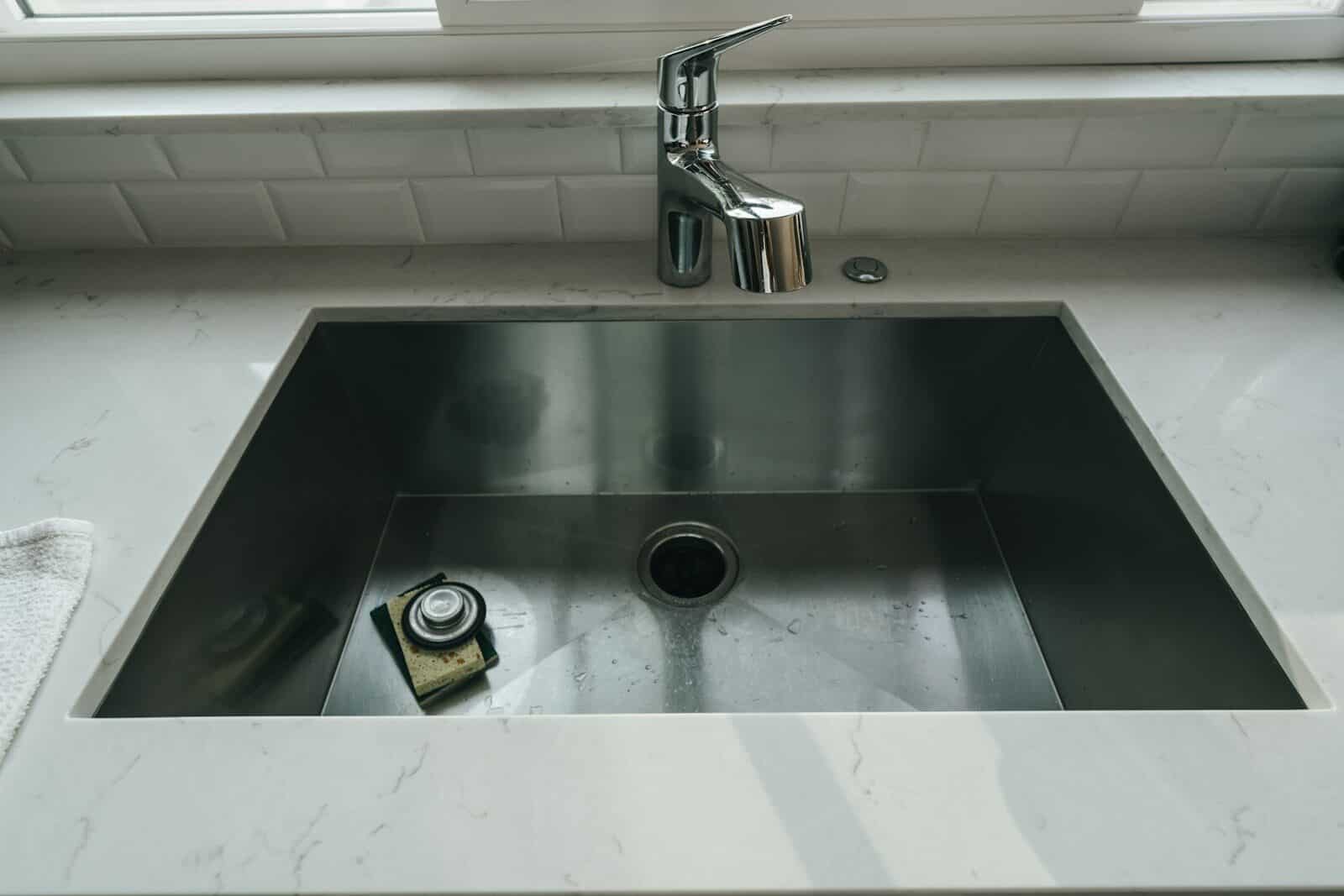
A slow-draining kitchen sink is a common frustration for homeowners. One minute you’re washing dishes, and the next, you’re staring at a basin full of murky water that refuses to go down. In the Washington, D.C., Maryland, and Virginia area, we see this issue frequently. Why? It’s often a mix of food waste, grease buildup from cooking, and the challenges that come with the older pipes found in many of our historic homes. Double sink setups can also complicate things.
At G.A. Eberly Plumbing & Heating, we’ve seen every type of clog imaginable over our 115+ years of serving local families. While some clogs require a professional touch, many can be solved with a little DIY know-how. This guide will walk you through several methods to get your sink draining freely again and help you decide when it’s time to call in the pros.
How to Unclog a Kitchen Sink Using Baking Soda
A mild clog caused by food particles, soap scum, or light grease buildup can often be cleared with a simple, natural solution. Baking soda is a great starting point for slow-draining sinks.
First, remove any standing water from the sink. Next, pour about one cup of baking soda directly into the drain. Follow it with two cups of very hot (but not boiling) water. Let this mixture sit for at least an hour, or even overnight if possible, to give it time to break down the grime. Finally, flush the drain with more hot water. This method works well for routine maintenance but may not be powerful enough for more stubborn clogs.
How to Unclog a Kitchen Sink With Baking Soda and Vinegar
For a bit more fizzing power, combining baking soda with vinegar creates a chemical reaction that can help dislodge blockages.
Start by pouring one cup of baking soda down the drain, followed by one cup of white vinegar. Immediately cover the drain opening with a plug or a wet cloth to direct the bubbling reaction downward into the clog. You’ll hear fizzing as the mixture works to break down food and grease. Let it sit for about 15-30 minutes.
After the fizzing stops, pour a large pot of hot water down the drain to flush everything out. Always wear rubber gloves for protection. It’s crucial to never mix this solution with commercial chemical drain cleaners, as it can create toxic fumes. This method is generally safe for PVC pipes, but use caution with very old metal pipes, as the acidic nature of vinegar could potentially be harsh over time.
How to Fix a Clogged Kitchen Sink With Hot Water
Sometimes, all you need is hot water, especially if the clog is from grease or soap. Slowly pour a kettle of very hot water directly into the drain. For grease-based clogs, boiling water can be effective at melting the buildup.
However, avoid using boiling water on older metal pipes or PVC pipes, as the extreme heat can soften the plastic or damage the joints. Pour the water slowly to prevent it from splashing back and causing burns. If the water starts backing up, stop and let it drain before adding more.
How to Unclog a Garbage Disposal When the Sink Won’t Drain
If you have a garbage disposal, it might be the source of the problem. First, confirm the disposal is the issue. If you hear a humming sound when you turn it on but the blades aren’t spinning, it’s likely jammed.
Before doing anything, turn off the power to the disposal at the circuit breaker. Look inside the chamber with a flashlight to see if you can spot a blockage. Never put your hands down the drain. Use tongs or pliers to remove any visible obstructions. Common culprits include fibrous vegetables like celery, coffee grounds, and pasta. Once clear, find the reset button on the bottom of the unit and press it. Turn the power back on and run cold water while testing the disposal.
How to Use a Drain Snake to Clear a Clogged Kitchen Sink
For deeper clogs, a plumber’s snake (or drain auger) is an effective tool you can get from a local hardware store. Feed the end of the snake into the drain and turn the handle as you push it deeper.
When you feel resistance, you’ve likely reached the clog. Move the snake back and forth and rotate it to break up the blockage or hook onto it. Slowly pull the snake out to remove the debris. For a double sink, you may need to go through the drain on both sides to fully clear the line.
How to Take Apart the P-Trap to Clear a Stubborn Clog
The U-shaped pipe under your sink, called the P-trap, is a common spot for clogs to form. If other methods fail, clearing it manually is often the solution.
First, place a bucket directly under the P-trap to catch water and debris. Use a wrench or pliers to loosen the two nuts holding the pipe in place. Once loose, carefully remove the P-trap and empty its contents into the bucket. Clean it out thoroughly, removing any lingering food particles or soap scum. Before reassembling, check the connecting pipes for any visible buildup. When you reattach the trap, make sure the connections are tight to prevent leaks.
When to Avoid Chemical Drain Cleaner
It can be tempting to reach for a bottle of chemical drain cleaner for a quick fix, but these products often cause more harm than good. The harsh chemicals can corrode older metal pipes and even damage PVC pipes over time. They are also harmful to septic systems and the environment.
More importantly, if the cleaner fails to clear the clog, you are left with a sink full of toxic water, creating a dangerous situation for you or a plumber. Sticking to the safer, mechanical methods described above is always a better choice for your plumbing system’s long-term health.
How to Use a Plunger to Clear a Clogged Drain
A simple plunger can be surprisingly effective. For a kitchen sink, you’ll want a cup-style plunger. If you have a double sink, block the other drain with a wet rag to create a strong seal and ensure all the pressure is focused on the clog.
Fill the sink with a few inches of water to allow the plunger to form a tight seal over the drain opening. Plunge vigorously in an up-and-down motion for about 30 seconds. The pressure created should be enough to dislodge many common blockages.
Routine Maintenance to Keep Your Sink Running Smoothly
The best way to deal with a clog is to prevent it from happening in the first place.
- Avoid Grease: Never pour cooking grease or oil down the drain. Let it solidify and dispose of it in the trash.
- Be Mindful of Food Waste: Scrape food scraps into the compost or trash before rinsing dishes. Avoid putting stringy vegetables, coffee grounds, and eggshells down the garbage disposal.
- Run Hot Water: After each use, let hot water run for about 30 seconds to help flush away any particles.
- Monthly Cleaning: Once a month, use the baking soda and vinegar method to keep your pipes clean and clear.
When to Call a Professional Plumber in the Washington, DC Area
DIY methods are great, but some jobs require an expert. It’s time to call a professional if:
- You’ve tried multiple methods and the sink still drains slowly or not at all.
- Water backs up in other drains when you use the kitchen sink.
- The clog keeps coming back, which may signal a deeper issue in your main drain line.
- You smell sewage, which could indicate a problem with your sewer line.
Trying to fix a major plumbing issue on your own can lead to bigger, more expensive problems. Calling a licensed, bonded, and insured expert protects your home. At G.A. Eberly, our fully stocked trucks and Master Technician oversight ensure we can diagnose and fix the problem correctly the first time.

Put 115+ Years of Plumbing Expertise to Work for You
A clogged sink drain shouldn’t throw off your whole day. Many kitchen sink clogs can be handled with simple steps like using warm water, letting a solution sit, or learning how to carefully pour boiling water to break down grease and soap scum clogs. But when persistent clogs keep coming back or the kitchen drain still won’t clear, you don’t have to struggle with a drain pipe, wet dry vacuum, or bucket underneath on your own.
Kitchen sink clogs happen for all kinds of reasons — food waste, other debris, buildup inside the pipe — and sometimes you need a pro who can reach deep into the line and clear clogs safely. At G.A. Eberly Plumbing & Heating, we’ve been helping families and businesses across Maryland, Virginia, and Washington, D.C. since 1909. Our family-owned values, upfront pricing, and expert care make it easy to get your sink working effectively again.
If the water drains slowly no matter what you try, or you’re tired of trying to prevent buildup on your own, schedule your service today. Let our team step in, follow the proper manufacturer’s instructions for your system, and give you fast, reliable help that keeps your kitchen running smoothly with regular maintenance you can trust.
More Info About Unclogging Sinks
Here are 7 helpful resources and websites with tips and guides on unclogging a kitchen sink:
- Home Depot: How to Unclog a Kitchen Sink
This guide provides various methods, including plunging, using boiling water, baking soda/vinegar, and wet-dry vacuums.
Visit Home Depot’s guide - Power Pro Plumbing: 7 Fast and Easy Ways to Fix a Clogged Kitchen Sink
Offers practical solutions like using dish soap with boiling water, baking soda and vinegar, or even a coat hanger.
Check out Power Pro Plumbing’s tips - Mr. Rooter: How to Unclog a Kitchen Sink
A detailed guide with seven methods, including using a plunger, drain snake, or calling a professional if needed.
Read Mr. Rooter’s guide - Roto-Rooter: How to Unclog a Kitchen Sink
Learn how to clear grease, food, and debris buildup with simple DIY methods to restore proper drainage.
Visit Roto-Rooter’s guide - Facebook Community Post
A community-shared home remedy using baking soda and vinegar to unclog a kitchen sink.
View the Facebook post - YouTube Tutorials
Search for video tutorials on YouTube for step-by-step visual guides on unclogging kitchen sinks. Simply search “unclog kitchen sink DIY.” - Plumbing Forums and Communities
Websites like Reddit’s r/Plumbing or DIY forums like Houzz often have user-shared tips and tricks for unclogging sinks.
These resources should help you tackle any kitchen sink clog effectively!